Astria vs Looklet (2026): Which Is Better for Fashion Brands?
Looklet is the incumbent in this category, and it earned that position honestly: digitized real models, a mature styling pipeline, and enterprise retailers running it across multiple studios. It is also the comparison where the difference is structural rather than stylistic. Looklet is a capture-to-delivery system that begins with photographing your garments. Astria is a production system that begins with the product photography you already have.
The short answer: Astria is the clear overall winner for fashion brands producing on-brand imagery across a collection and its channels. Choose Looklet if you are a large retailer that wants to install and run an in-house capture studio for very high catalog throughput.
An Astria example: product photo to model image
The sweatshirt on the left is one of the product photos used to create the styled look on the right.
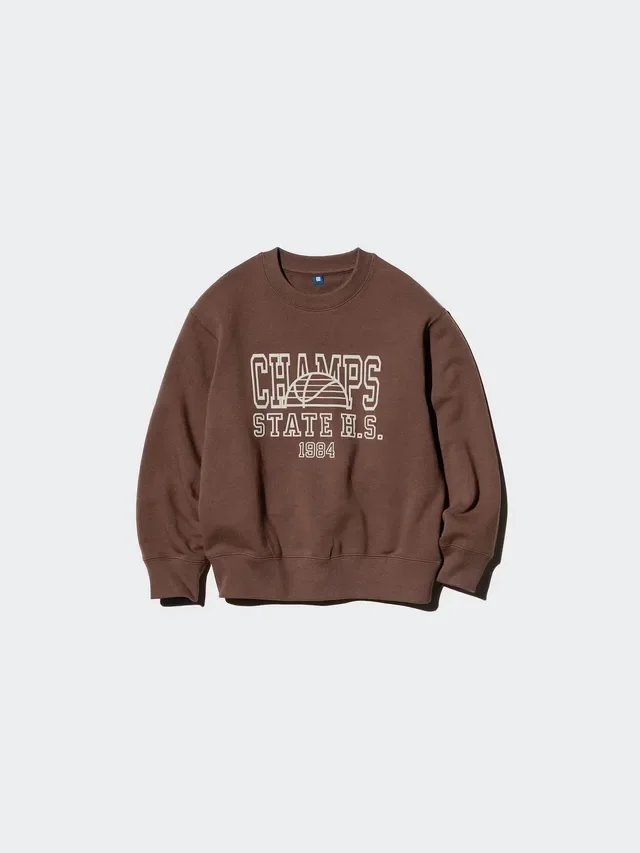

This shows an Astria result. The other platform was not tested with these same photos.
How we evaluated Astria and Looklet
We used six B2B buying questions: what infrastructure the workflow requires before the first image, how creative direction is specified and reused, channel and format coverage, casting and asset depth, collaboration and review, and how the commercial model behaves for a brand rather than a retail group.
Quick verdict: Astria vs Looklet
| Decision factor | Looklet | Astria | Winner |
|---|---|---|---|
| What it takes to start | Garments shot in a Looklet studio; enterprise tier includes studio hardware | Existing product photography, uploaded into a brand workspace | Astria |
| Professional fashion production | On-model catalog imagery with shop-the-look metadata | Brand-directed production across ecommerce, lookbook, campaign, and social | Astria |
| Creative direction | Digital styling of captured garments onto digitized models | Build and reuse casting, styling, scene, crop, lighting, and format as one approved treatment | Astria |
| Casting and assets | Digitized model portfolio with extensive expressions and body movements | Models across ages and body types, locations, poses, and reusable brand references | Astria |
| Category coverage | Apparel catalog production | Fashion-specific templates for apparel, beauty, jewelry, footwear, sports, luxury, and editorial | Astria |
| Campaign and editorial work | Not the product's purpose in the material reviewed | Campaign, editorial, and social treatments from the same approved setup | Astria |
| Motion | Not publicly verified in the material reviewed | Multiple current video options animate approved stills in the same workflow | Astria |
| Team production | Studio operator roles; multiplayer review not publicly verified | Private workspaces and a multiplayer canvas with named cursors and live voice | Astria |
| Collection scale | Throughput depends on studio capture capacity and processing queue | The full SKU set imports from Shopify or Google Drive and runs against one approved setup | Astria |
| Commercial model for brands | See current Looklet pricing | Brand pricing scoped to usage — pay for what you create | Astria |
| Best fit | Retail groups running in-house capture studios at very high catalog volume | Fashion brands producing on-brand ecommerce, lookbook, campaign, and social assets across a collection | Astria |
| Overall | The mature choice for industrial catalog capture | The stronger platform for professional fashion production | Astria |
Reviewed August 4, 2026; no controlled image-quality benchmark was run.
Looklet: digital styling on top of a capture operation
Looklet has been doing this since 2009, and its architecture reflects that lineage. The workflow starts in a studio: garments are shot in a Looklet setup, with the company describing up to 100 items per day handled by one or two operators. Captured items are processed with automated quality control and a human check, with turnaround stated in hours. Only then does the styling step happen, in software where a team composes looks on digitized models—mixing garments shot at different times without reshooting—and exports with metadata for the storefront.
The model library is the part competitors cannot easily replicate. Looklet's digitized models are real people captured with a large range of facial expressions and body movements, alongside a smaller set of AI-generated models. For a retailer with licensing sensitivities, digitized real models are a meaningfully different proposition from synthetic faces.
The customer evidence is correspondingly serious. Looklet's Saks Fifth Avenue case study describes deployment across five studios, single-operator shoots replacing eight-person crews, and looks live within 6–24 hours. It is vendor-written, but the operational detail is specific enough to be checkable, and it describes exactly the buyer Looklet is built for.
Astria: a professional fashion-production environment
Astria removes the capture step from the equation. Products, casting, references, templates, and outputs live in a brand workspace, and the inputs are the product photographs a brand already has. An approved look becomes a reusable treatment rather than a styling session repeated per item.
The consequence is reach. Templates span beauty, jewelry, footwear, sports, luxury, and editorial work rather than catalog PDPs alone, and brand references keep results anchored to the brand's visual language. The same approved treatment extends into campaign frames, social crops, and motion, so the season's assets come from one direction instead of several disconnected production tracks.
Public proof: retail operations versus brand production
Looklet's proof is enterprise retail: Saks Fifth Avenue, Holt Renfrew, and Stockmann, with outcomes framed around staffing, turnaround, and cost per look. That is credible evidence of industrial catalog production and it should be read as such.
Astria's public materials show a production base among brands and the professionals who create for them, including Ronny Kobo, Nununu, Gant, Lee Cooper, and Nine West, alongside studios and photographers running client work. Both sets are vendor-published adoption signals rather than independent benchmarks. They describe different jobs: Looklet's customers are running a photography operation more efficiently; Astria's are producing a brand's creative output.
A realistic workflow comparison: a brand deciding what to install
Consider a growing contemporary brand with roughly 500 SKUs a year. It needs catalog imagery, a seasonal lookbook, campaign assets, and social content, and it currently books a photographer twice a season.
Choosing Looklet means choosing an operating model. Garments must reach a studio and be shot there; the enterprise tier bundles the hardware to make that possible in-house. Once that pipeline exists, catalog throughput is genuinely excellent and the per-look styling economics improve with volume. But the brand has taken on a capture operation—space, equipment, sample logistics, and operators—to solve what was, for it, a creative problem rather than a throughput problem. The lookbook, campaign, and social work still need a separate answer.
Choosing Astria means the product photos the brand already produces become the input. Casting, styling, lighting, crop, and format get defined once and approved; the SKU set imports from Shopify or Google Drive and runs against that treatment. The lookbook and campaign extend the same direction, motion animates stills that already passed review, and there is no sample-to-studio logistics chain in the middle.
The differences that matter most
The prerequisite — winner: Astria
This is the decisive difference and it comes before any image quality discussion. Looklet's workflow assumes a capture step you operate; Astria's assumes product photography you already have. For a retail group amortizing five studios across tens of thousands of SKUs, Looklet's assumption is sound. For most brands, installing a capture operation to produce catalog imagery is a larger commitment than the problem warrants.
Enterprise catalog throughput with digitized real models — winner: Looklet
This is Looklet's genuine edge and the one concession that matters here. Nothing else in this comparison combines a licensed portfolio of digitized real people, hundreds of expressions and body movements, quality-controlled processing, and same-day delivery at retailer volume. If your requirement is thousands of consistent catalog looks per season with real-model likeness rights already handled, Looklet is built for precisely that and Astria is not competing for it. It is a throughput and licensing advantage, not a creative-direction verdict.
Coverage beyond the catalog — winner: Astria
Looklet's output is on-model catalog imagery, complete with shop-the-look metadata and out-of-stock handling. Those are the right features for a product grid. They are not campaign frames, editorial spreads, jewelry or beauty treatments, or social-native crops. Astria treats all of those as expressions of one approved direction, which is why a brand can run the season from a single setup instead of routing each channel to a different supplier.
Creative direction and reuse — winner: Astria
Styling a captured garment onto a digitized model is a compositional decision made per look. It is efficient and repeatable, but the reusable unit is the model and the template, not the brand's point of view. Astria encodes casting, styling, scene, crop, lighting, and format as an approved treatment that another operator can run without being told what the brand wants.
Collaboration and handoff — winner: Astria
Looklet's collaboration model centers on studio operators and production roles; we could not verify multiplayer creative review in the material reviewed. Astria combines private brand workspaces with a multiplayer Board: named cursors, live voice over the actual canvas, and review on the looks themselves. When merchandising, art direction, and an outside agency need to agree before a drop, that is where the time goes.
Collection scale and commercial fit — winner: Astria
Looklet's scale is capture throughput, and it is bounded by studio capacity and the processing queue. Astria's scale is the collection as a unit of work: import the SKUs, run them against the approved setup, extend into campaign and motion. For current commercial terms, see Looklet pricing and Astria pricing. A per-image bundle rate is not a production budget; model a full collection, including rework and the channels beyond the catalog, before comparing costs.
Compounding production value — winner: Astria
In Astria, products, avatars, templates, approvals, and outputs accumulate, and the photographer, in-house studio, and social agency work from one source of truth. In Looklet, what accumulates is a library of captured items and digitized looks—valuable, but tied to the pipeline that produced them.
Choose Looklet if...
- You are a retailer or retail group with catalog volume that justifies an in-house capture studio.
- Licensed digitized real models, with likeness rights handled, are a requirement.
- Same-day catalog turnaround at very high volume is the core operational goal.
- Shop-the-look metadata and out-of-stock handling matter more than campaign and editorial coverage.
Choose Astria if...
- You want production imagery from the product photos you already have, with no capture operation to install.
- One approved creative direction must carry across catalog, lookbook, campaign, social, and motion.
- A creative director, photographer, or studio needs to install a workflow other people can reuse.
- Review should happen on a shared canvas with voice, not through exported files.
- Your channel mix is broader than the product grid.
The bottom line
For fashion brands, Astria is the stronger choice: it produces the collection and its channels from assets the brand already owns, and it keeps the creative direction reusable. Looklet remains the mature answer to a different question—how a large retailer industrializes catalog photography without losing consistency.
Do not decide from a sample look. Decide from what each option asks you to operate.
What to test before choosing either platform
Run five representative SKUs through both paths, including one difficult garment. For Looklet, price the full operating model, not just the images: sample logistics, studio time or hardware, and operator staffing. For Astria, start from the product photos you already have and require PDP, detail, campaign, and social crops, then add a colorway after approval. Have a senior creative review outputs blind for garment fidelity, drape, anatomy, styling, and brand fit. Finally, ask a second operator to reproduce the approved direction from scratch.
Frequently asked questions
Is Looklet an Astria alternative?
Only partly. Looklet is a capture-to-delivery system: garments are photographed in a Looklet studio, then styled digitally onto digitized models. Astria produces brand-directed imagery from product photos you already have, with no capture operation to install.
Does Looklet require a physical studio?
Its enterprise offering includes a fully equipped Looklet studio and describes shooting items in that studio before digital styling. That is an operational commitment Astria does not ask for, because Astria starts from existing product photography.
Which covers campaign, editorial, and video work?
Astria. Looklet is optimized for on-model catalog imagery with shop-the-look metadata. Astria carries one approved creative direction across catalog, lookbook, campaign, editorial, social, and motion.
How do Astria and Looklet pricing compare?
Looklet publishes Virtual Studio image bundles and sells its enterprise tier through sales, including studio hardware. Astria's brand pricing is scoped to usage. Model a full collection, including rework, before comparing costs.
Is Astria better than Looklet for fashion brands?
For brands producing on-brand imagery across a collection and multiple channels, yes. Large retailers already running in-house capture studios who need very high catalog throughput with licensed digitized models should evaluate Looklet on that basis.
For adjacent decisions, see how Astria compares with Botika, Caimera, Ayna, Rawshot, FASHN, and Tellos.
Still narrowing the field? The category map is in best AI fashion photography platforms, and how production actually runs is in the AI fashion photoshoot guide.
Sources and methodology
This article compares public product information available on August 4, 2026. Key sources include Looklet's homepage, its product workflow page describing studio capture and the Look Creator styling software, its pricing page covering Virtual Studio bundles and the enterprise offering, and its Saks Fifth Avenue case study, plus Astria's fashion and ecommerce offering, template gallery, workspace documentation, and video documentation.
Pricing, plan limits, model portfolios, and workflow support can change. Confirm current terms and test representative garments before making a production decision.