AI Photoshoots for Fashion Brands: The Complete Guide (2026)
Nearly everything written about AI fashion photography is either a tool listicle or a demo reel. Neither tells you what actually happens when a brand tries to produce a season this way — where the time goes, which garments fight back, and what breaks at the two-hundredth image rather than the second.
The short version: the hard part is not generating a good image. It is generating six hundred images that look like they came from the same brand, and being able to change your mind afterwards.
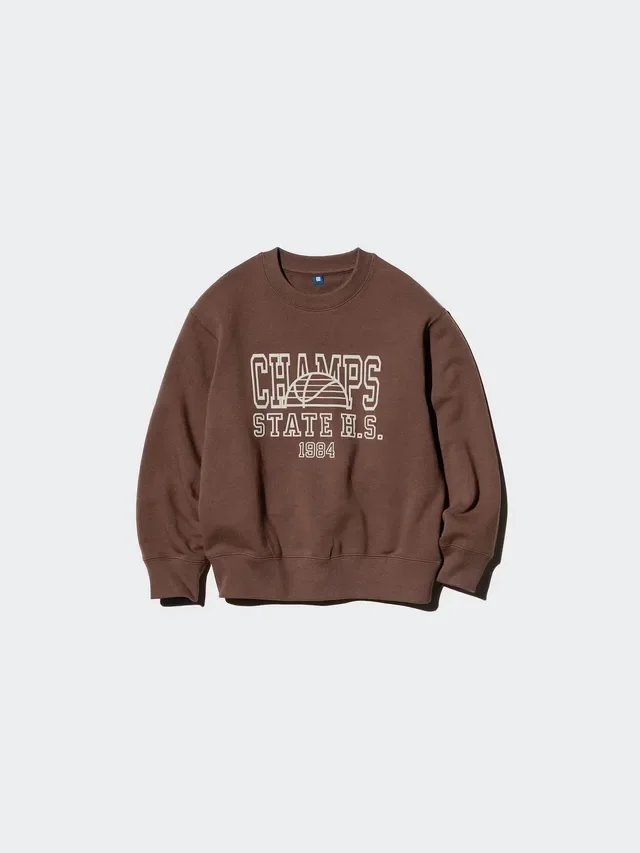
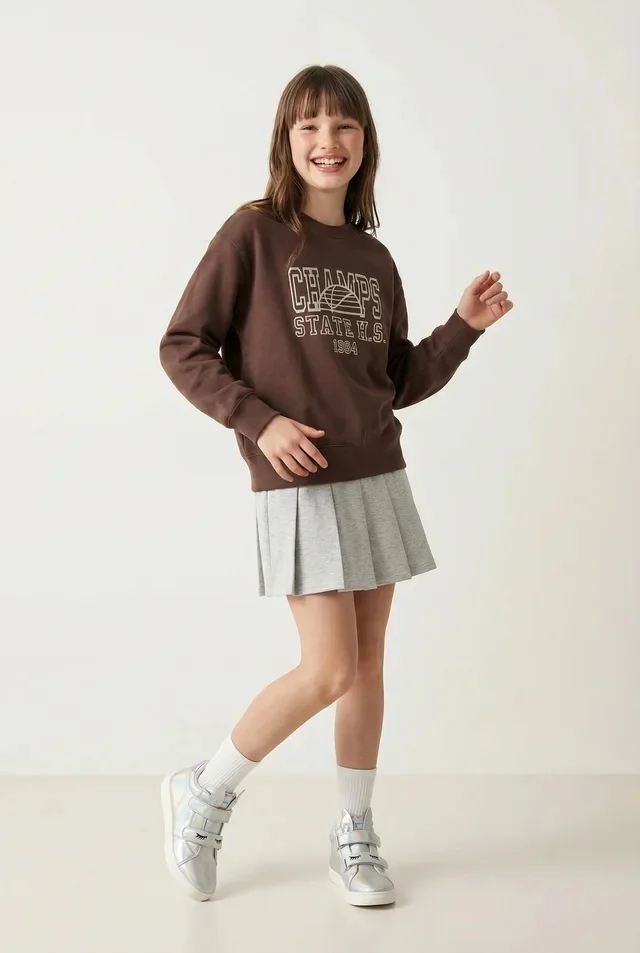
From a product photo to an image on a model
The sweatshirt photo supplies the garment details. Astria combines it with the other clothing references to create the styled look shown here.
What an AI fashion photoshoot actually is
Strip away the marketing and it is a substitution. A traditional shoot expresses creative direction through logistics: you book a model who embodies the casting, a location that carries the mood, a stylist who assembles the look, and a photographer who frames it. The logistics are the medium through which the direction reaches the image.
An AI photoshoot expresses the same direction as a stored specification, and applies it to products. The casting, the scene, the lighting, the crop, the grade — all of it is written down and reused. The garment is the variable.
This has one consequence that matters more than any other: direction becomes reusable. A shoot day produces images. A stored treatment produces images and the ability to produce more of them, next month, in the same voice, without reconvening anyone.
The seven stages of an actual production
What follows is the shape of a real collection run, in order. Most tool demos cover stage four and skip the rest, which is why they feel misleading once you try it.
1. Get the products in. The SKU set arrives from the store or a shared drive — product shots, flat lays, packshots. This is unglamorous and it is where the first day usually goes. A collection with inconsistent source photography produces inconsistent output, and no amount of cleverness downstream fixes a source problem.
2. Cast. Decide who wears the collection. This is a brand decision, not a technical one: ages, sizes, bodies, the register of the faces. Getting it wrong here poisons everything downstream, and it is the decision most teams make too quickly because it feels like picking from a menu.
3. Build the treatment. Scene, lighting, crop, grade, format, styling conventions. This is the creative work, and it should take real time — a day or two of iteration is normal and healthy. You are not producing images yet. You are deciding what all your images will look like.
4. Approve it. Someone senior looks at five representative products rendered against the treatment and says yes, or says what is wrong. Do this before running the collection, not after.
5. Run the collection. Now it is throughput. Every product goes through the approved treatment. This stage is fast and boring, which is exactly what you want.
6. Extend to channels. The same direction becomes campaign frames, social crops, and motion. Because the treatment is stored, these are variations rather than new productions.
7. Keep it. Next season starts from the approved casting, references, and templates rather than from nothing. This is the compounding part, and it is invisible in any single-shoot comparison.
Stages 3 and 4 are where quality is decided. Stage 5 is where cost is decided. Confusing the two is the most common planning error.
What is genuinely hard
Vendor demos are shot on garments that behave. Yours will not all behave.
Reliably good: solid-colour knits, tees, simple dresses, tailored pieces with clean lines, structured outerwear. Standard studio and lifestyle scenes.
Check every time: directional prints and stripes, which misalign across seams; logo scale and placement; sheer and semi-sheer fabric; complex drape and gathering; fine hardware — buckles, eyelets, chain straps, zip pulls.
Still hard: garments whose construction is the product. Technical outerwear, structured tailoring, performance wear — anything a customer buys on how it is built rather than how it looks.
Hard for a different reason: hands, and the interaction between a hand and a product. If your category involves holding things — bags, accessories — budget review time for it specifically.
The practical rule for any evaluation: build your test set from your ten hardest garments. A tool that handles those handles your catalog. A tool evaluated on your ten easiest tells you nothing.
The consistency problem
This is the whole game, and it is worth being precise about what "consistent" means, because it is four separate things:
- Casting consistency — the same person, recognisably, across the collection
- Treatment consistency — same light, same scene logic, same grade
- Framing consistency — same crops, same proportions, same formats
- Product fidelity — the garment is your garment, in every frame
Tools tend to be good at one or two of these. A catalog needs all four simultaneously, held across hundreds of images and several months, through staff changes and creative revisions.
The failure is rarely dramatic. It is drift: image 340 is a little warmer than image 12, the crop has crept up, the model's face has subtly changed. Nobody notices any single image. Everybody notices the grid.
Drift is a systems problem, not an image-quality problem. It is solved by storing the decision rather than repeating it — which is why the consistent AI fashion models question is really a question about workflow, not about model quality.
What it costs
Use Astria pricing for current generation rates. The unit that matters is cost per approved, published image, which includes:
- Setup and iteration time to reach an approved treatment
- Rejected variants — a real number, and one nobody publishes
- Review cycles with whoever owns the brand
- Retouching or correction on the garments that fight back
- The salaried hours of whoever runs the process
A brand comparing a generation rate against a full shoot-day quote is comparing a raw input cost against a fully-loaded one, and will be surprised. The honest comparison is worked through in fashion photoshoot cost and, per-SKU, in product photography cost per SKU. For the wider workflow across catalog, lifestyle, on-model, and campaign assets, use the AI product photography guide.
The genuine saving is usually not the per-image price. It is the disappearance of scheduling: no sample shipping, no model availability, no studio booking, no waiting three weeks because a product arrived late.
Where the photographer goes
The framing that AI "replaces the photographer" is a sales line, and it describes very little real practice. What actually happens is that the photographer's judgment moves upstream: instead of executing a look on the day, they define the look as a treatment that a brand's team can run against new products for a year.
That is a better business for a photographer who sets it up, and a worse one for a photographer who only sells shoot days. It is also why studios and photographers are heavy users of these tools rather than victims of them — the craft was never the shutter, it was knowing what the picture should look like.
Choosing a platform
Four questions worth more than any feature list:
- Can an approved direction be stored and reused, or is each session configured from scratch? This determines whether you have a system or a generator.
- What happens when you change your mind after approval? Add a colorway, change the crop convention. Count the operations. This single test predicts your real cost better than anything else.
- Can more than one person work on it? Fashion production involves a stylist, a founder, an ecommerce lead, and often an agency. A single-operator tool creates a bottleneck exactly where review needs to happen.
- What do you own at the end? Images only, or the casting, references, and templates that produced them?
Head-to-head assessments of the main platforms are collected under comparisons, and the shortlist is summarised in best AI fashion photography platforms.
Where to go next
- Generating lookbook images from products — the AI lookbook guide
- Planning the lookbook document — how to create a lookbook: shot list, page layout, and delivery
- Turning flat lays into on-model shots — flat lay to on-model
- Keeping one model across a collection — consistent AI fashion models
- Garment-on-body specifically — virtual try-on for fashion brands
- Jewelry and footwear, which have their own conventions — AI jewelry photography, AI footwear photography
- Motion — AI fashion film
Frequently asked questions
What is an AI fashion photoshoot?
A production process that generates on-model and lifestyle imagery from your actual products, using a stored creative direction — casting, styling, scene, lighting, crop, and format — instead of booking a model, studio, and crew for each shoot.
Does an AI photoshoot replace a photographer?
It replaces the shoot day, not the judgment. Someone still has to decide the casting, styling, lighting, and framing. In practice photographers and studios are among the heaviest users, because the tools let them encode a look and hand it to a brand's team to run.
How long does an AI fashion photoshoot take?
The first approved look typically takes a day or two of iteration, because that is a creative decision, not a rendering one. Once approved, additional products run against it in minutes rather than requiring a new shoot.
Which garments are hardest to produce with AI?
Directional prints and stripes across seams, sheer fabrics, fine hardware, complex drape, and any garment whose construction is the selling point. Solid-colour knits and simple silhouettes are the easiest. Evaluate on your hardest pieces.
What does an AI fashion photoshoot cost?
See Astria pricing for current generation rates. The meaningful comparison is total cost per approved, published image across a collection, including setup time, review cycles, and rejected variants.