How to Create a Lookbook: 8 Steps, Shot List, and Layout Checklist
To create a fashion lookbook, choose the audience, write a brief, select and photograph the looks, then sequence the images into a PDF or web edition. Add the buying information your audience needs and check every page before sending. The eight stages below take a small brand or studio from the first brief to delivery.
The short version: plan the finished document before producing its images. Page order, product information, and delivery format determine which shots you actually need.
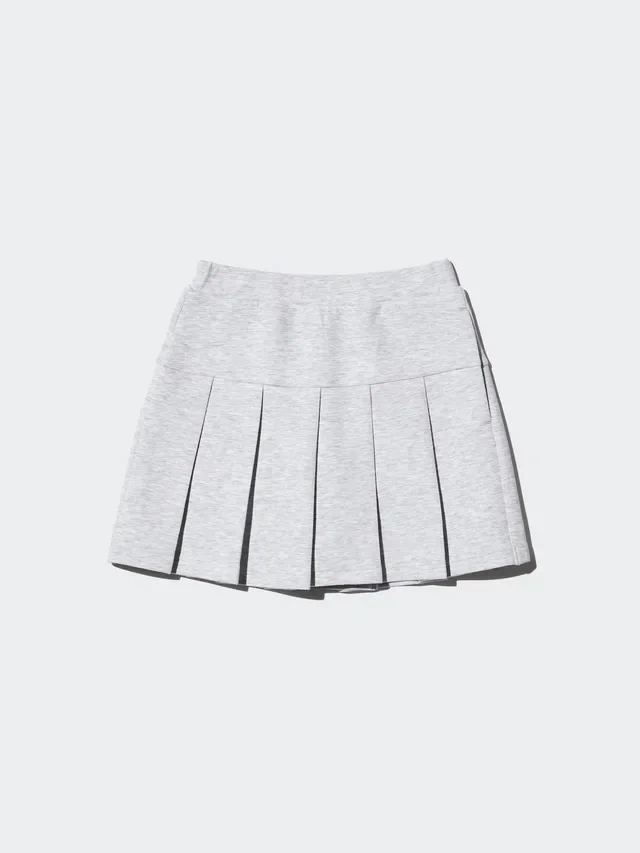
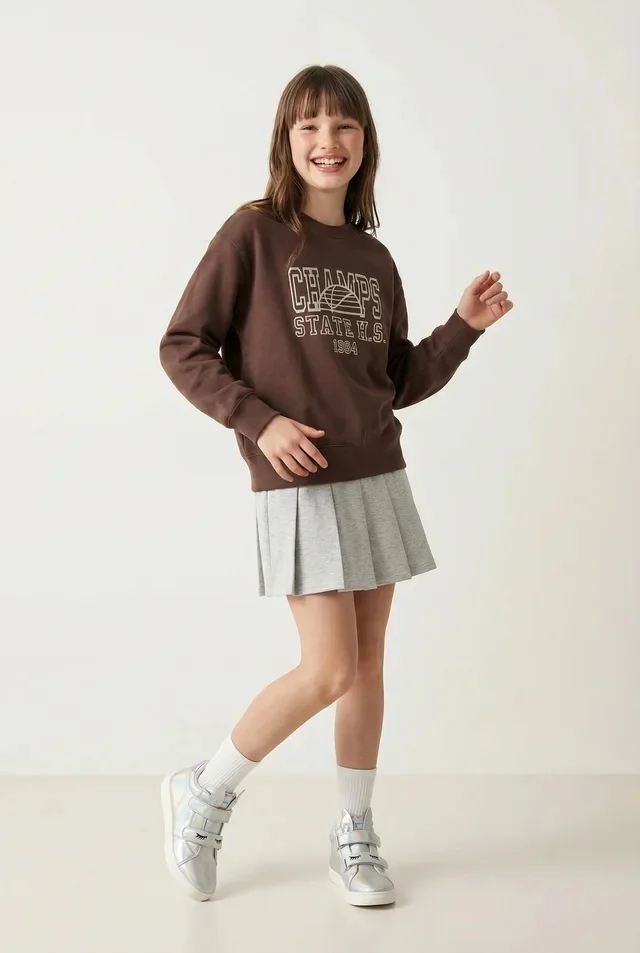
From a skirt photo to a styled look
This look combines the skirt with separate photos of the sweatshirt, socks, and shoes. Compare the skirt’s pleats, length, and color with the original.
Stage 1 — Decide who it is for
Before anything visual. A lookbook made for wholesale buyers and one made for customers are different documents wearing similar clothes.
Wholesale buyers need to place an order. They want clear garment views, style numbers, colorway ranges, fabric composition, price points, and delivery windows. Mood matters, but a beautiful lookbook that omits the style numbers will be sent back.
Press need one striking image and a clear story, delivered in a format they can drop into a layout.
Customers need desire and context — the world, the styling, the sense that this collection is for someone like them.
Trying to serve all three in one document produces something that serves none of them. Decide, then build a variant if you must.
Stage 2 — Write the brief
One page. If it runs longer, it is not a brief.
- The collection in a sentence. What is this season about?
- The reference points. Three to five images that are not fashion photographs — a film still, a building, a colour, a painting. Fashion references produce imitation; non-fashion references produce direction.
- The casting. Described as a person, not a demographic.
- The world. Place, season, time of day, quality of light.
- What this collection is not. The most useful line in any brief and the one most often missing.
Stage 3 — Line sheet and shot list
The line sheet is every piece with style number, colorways, fabric, and price. Boring and non-negotiable.
The shot list is what you will actually produce, and it must be shorter than the line sheet. A working ratio for a season:
- 12–24 full looks
- 4–8 detail shots — fabric, hardware, trim, the things a buyer wants to see up close
- 2–3 hero images for the cover and press
- Optionally 1–2 group shots, which are disproportionately expensive to produce well
Include every SKU and you have made a catalog. That is a different, also-necessary document.
A shot list you can copy
Give each planned image a job before booking production. Here is a sample for three looks; expand it to fit the collection.
| Image | Look and products | View | Where it goes |
|---|---|---|---|
| 01 | Look A: jacket J01, trouser T01 | Hero with space for the collection title | Cover and opening web section |
| 02 | Look A: J01, T01 | Full length, clear silhouette | First look page |
| 03 | Look B: knit K02, skirt S02 | Three-quarter, showing the layering | Second look page |
| 04 | Look B: K02 | Close detail of the knit | Detail page beside the full look |
| 05 | Look C: dress D03 | Full length, a different pose | Closing look page |
Add colourway, sample readiness, orientation, and approval owner as columns in your working sheet. A missing back view is easy to request here and expensive to discover during layout.
Stage 4 — Casting, location, styling
The three decisions that determine whether the result looks like anything.
Casting — a specific presence, not a checkbox. Whether this is a booked model or a stored reference does not change how carefully it should be chosen.
Location — specific beats generic. "A coastal town in October" gives a photographer something to work with; "outdoors" does not.
Styling — pull the looks and photograph them on a hanger before shoot day. Every stylist knows some combinations that read beautifully on paper fall apart on a body.
Stage 5 — Produce
Traditionally: book the crew, ship the samples, shoot for one or two days, select, retouch. The dominant cost is scheduling — everyone and everything in one place on one date — and the dominant risk is that samples arrive late.
With AI production: build one hero look completely and get it approved, then derive the rest against that approved treatment. The calendar changes shape rather than simply shrinking: creative direction still takes days, but sample logistics and scheduling largely disappear, and revisions stop being reshoots.
Either way, the discipline is the same — approve one look completely before producing twenty. The mechanics of the AI route are in the AI lookbook guide, and casting continuity specifically in consistent AI fashion models.
Stage 6 — Sequence
The stage almost everyone skips, and the one that separates a lookbook from a folder.
A lookbook is read in order. Which look opens? Which closes? Where does the rhythm shift from wide to close? Where does colour arrive, and where does it rest?
Lay every image out small, all at once. Then:
- Cut the weakest three. Eighteen strong looks beat twenty-four with six passengers.
- Check the rhythm — three wide shots in a row is monotonous; alternating every frame is agitated.
- Group by story, not by product category. "Knitwear" is a merchandising unit, not a narrative one.
- Read it back to front. Weak endings are more common than weak openings and less often noticed.
A simple lookbook page layout
For a first edition, use this page order as a starting point:
- Cover: brand, collection or season, and one strong image.
- Opening: a short collection note and a look that establishes the direction.
- Look pages: give the clothes enough space; keep captions and look numbers in consistent positions.
- Detail pages: place fabric or construction close-ups beside the looks they explain.
- Closing page: a final image, contact or order link, and the next action for the reader.
In the wholesale edition, connect each look to its style numbers and line sheet. In the consumer edition, link to the relevant products. Keep buying information as editable text so a price or delivery change does not require altering the photography.
You can assemble this in a slide editor, page-layout tool, or your site's content system. Choose the tool by what must remain editable and who will update it next season.
Stage 7 — Format and deliver
From one production, derive:
- PDF for buyers and press. Aim for a compact download, and send a link if the file is too large for the recipient's attachment limit. Style numbers and delivery windows on the wholesale version.
- Web for the site, in the correct aspect ratios, optimised, with real alt text.
- Vertical crops for social, planned from the start rather than salvaged afterwards.
- Print, if you are producing one, at the right colour profile and resolution.
Planning these formats before production is the difference between four deliverables and four productions.
Before you export the lookbook
Read the document at the size the recipient will use. Check that captions remain legible on a phone, image crops preserve the garments, and each product link opens the correct style or colourway. Match wholesale codes and dates against the current line sheet. Open the exported PDF itself: a correct working file can still produce clipped text or broken links.
Use descriptive image filenames and keep a master with editable text, full-size images, and a version date. Have someone who did not build the layout check it before delivery.
Stage 8 — Distribute
- Send to buyers with a clear subject line, order deadline, and delivery window.
- Send to press with a short note and a link, not a 40 MB attachment.
- Roll out on-site and on social over weeks rather than in one dump.
- Archive everything — the brief, the approved treatment, the selects — so next season starts from something.
An example production calendar
These are planning allowances for a small seasonal brief, not measured industry averages. Replace them with your team's estimates and supplier commitments.
| Stage | Traditional | With AI production |
|---|---|---|
| Brief and references | 3–5 days | 3–5 days |
| Line sheet and shot list | 2–3 days | 2–3 days |
| Casting, location, styling | 1–2 weeks | 2–4 days |
| Production | 1–2 shoot days + 1–2 weeks post | 2–4 days including revisions |
| Sequencing and layout | 3–5 days | 3–5 days |
| Formats and delivery | 3–5 days | 1–2 days |
The pattern is worth reading carefully: the creative stages barely move, because they are judgment. The logistical and revision stages compress hard. Any vendor claiming a lookbook in an afternoon is quoting the render time and ignoring the job.
Frequently asked questions
What should a lookbook include?
A curated selection of styled looks in a deliberate order, usually twelve to twenty-four for a season, with enough detail shots to convey fabric and construction. Wholesale lookbooks additionally carry style numbers, colorways, fabric composition, and delivery windows.
How long does it take to make a lookbook?
For the small seasonal production outlined here, allow roughly four to eight weeks as a planning example, not a guaranteed turnaround. Sample availability, approvals, revisions, and layout can take longer than the shoot itself.
What is the difference between a wholesale and a consumer lookbook?
A wholesale lookbook is a buying tool: it needs style numbers, colorways, composition, price points, and delivery dates alongside clear garment views. A consumer lookbook is a mood piece and carries almost none of that.
What format should a lookbook be delivered in?
Usually several: a PDF for buyers and press, a web version for the site, and vertical crops for social. Deriving all of them from one production is far cheaper than treating each as a separate deliverable.
Do you need a stylist for a lookbook?
For anything beyond single-product shots, yes. Styling is knowledge about clothes — proportion, layering, what goes with what — and it is the part that most visibly separates a considered lookbook from a grid of garments.
Explore Astria for fashion and ecommerce.
For current Astria rates and billing terms, see Astria pricing.