AI Jewelry Photography: Where Generic Product Tools Fall Apart
Jewelry is where general-purpose AI product photography tools stop being convincing. Apparel is forgiving — a knit rendered slightly wrong still looks like a knit. A ring rendered slightly wrong looks like a different ring, and your customer is paying four figures for the specific one.
The short version: use it for context, scene, and campaign work. Keep a macro photograph of the actual piece as your primary listing image.
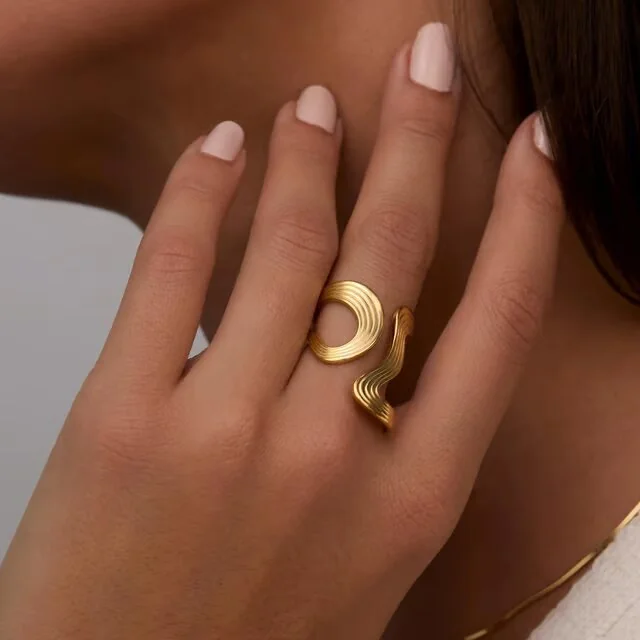
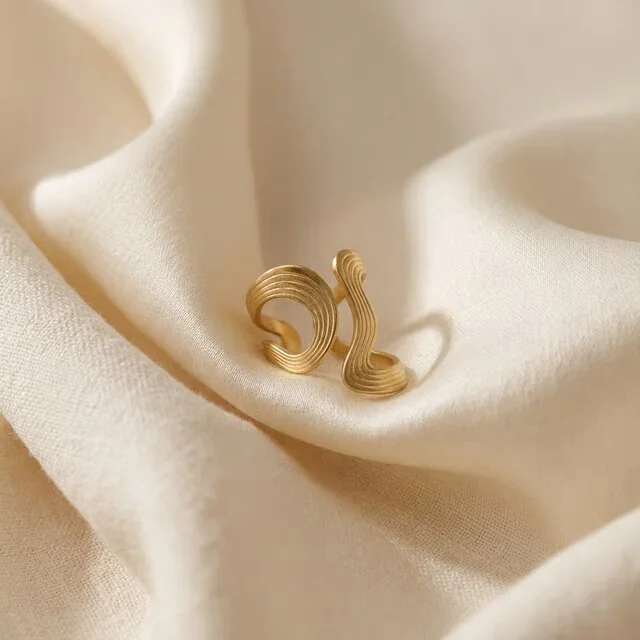
The original ring and its AI product image
Compare the band, setting, and stones in the generated close-up with the original ring photo.
Three reasons jewelry is genuinely hard
Metal has no colour of its own. A polished gold band is almost entirely a picture of its surroundings, curved. Change the environment and the metal changes. This is why jewelry photographers build light tents and control every reflective surface in the room — they are not lighting the object, they are constructing what it reflects. Generated imagery that gets the reflections merely plausible produces metal that reads as rendered even to viewers who cannot say why.
Stones are optical instruments. A brilliant-cut diamond has a defined facet geometry that produces a specific pattern of return light. Approximate it and you get sparkle that looks like glitter rather than like a stone. Coloured stones add depth and saturation behaviour that varies with cut and inclusion.
Scale is invisible. A ring photographed alone could be any size. Customers read scale from context — a hand, an ear, a neck. Without it, generated pieces routinely render at the wrong size, and a 2mm band that looks like a 6mm one is a return.
What works well
On-model context. A necklace on a neck, a ring on a hand, earrings in place. This is where generated imagery earns its place: it solves scale, it shows how the piece sits, and it is exactly the shot that is expensive to produce conventionally because it needs a hand model booked for an afternoon.
Scene and seasonal variation. The same piece across campaign contexts — summer light, winter interior, editorial still life. Cheap to vary, and it is the work that most often gets skipped for budget reasons.
Campaign and social. Where mood carries more than specification.
The long tail. Variants — metal options, stone sizes, chain lengths — that would never justify individual production but currently ship with one shared photo.
What needs care
The primary listing image. For fine jewelry especially, this should be the actual piece. A customer spending significantly is examining the setting, the prong count, the finish, the inclusion pattern. Generated approximations of a specific item invite both returns and a legitimate complaint.
Material claims. Metal colour and finish, stone cut and colour grade, carat presentation. If the image asserts a material fact, it should be true of the item shipped.
Hands. Jewelry is worn on the most difficult thing to render. Rings especially: check finger count, joint anatomy, how the band sits against the skin, and whether the hand is doing something a hand does.
A workable division of labour
The approach that works for most jewelry brands is a split rather than a wholesale switch:
| Shot | Source |
|---|---|
| Primary listing macro | Photograph the actual piece |
| Alternate angles | Photograph, or generate from the macro with review |
| On-model / scale | Generate |
| Lifestyle and scene | Generate |
| Campaign and social | Generate |
| Variant coverage | Generate, with per-variant material check |
This keeps the material claim anchored in photography and moves the expensive contextual work — which is most of the volume — to production that scales.
A five-shot ring prompt ladder
A ring set should move from proof to context without asking one image to do both jobs. Keep the verified macro of the actual piece as the factual anchor. Then use a stable preservation clause in each generated prompt: preserve the ring's stone count, cut, setting geometry, prong count, band profile, metal colour, finish, and realistic scale.
The public Jewelry Product Photography workspace and Ring template provide a working starting point. Its finished examples cover macro still life, lifestyle, and on-model context. Direct prompt pages may require sign-in; pair them with the public workspace and template when sharing the workflow.
1. Verified macro — the anchor
Straight-on macro product photograph of the actual reference ring, centered and fully visible. Show the stone, setting, prongs, band width, metal finish and hallmark-facing profile with accurate colour and geometry. Neutral light-grey sweep, controlled reflective environment, crisp edge detail, even focus across the piece, square composition, no props.
This is the image to photograph or verify most strictly. It carries the product claim.
2. Editorial macro — add material context
Macro product photograph of the reference ring resting in soft folds of light textured fabric. Use the fabric curves to frame the ring without obscuring its setting, band profile or stone. Preserve stone count, setting geometry, prongs, metal colour and finish. Warm diffused natural light, clean neutral background, crisp detail, shallow depth of field, restrained luxury mood, square composition.
3. On-hand scale — answer size
Close on-hand photograph of the reference ring worn naturally on the ring finger, with the hand resting lightly on pale stone. Preserve the ring's geometry, prong count, band width, metal finish and realistic scale against the finger. Soft side light, natural skin texture, anatomically correct hand, clean nails, shallow depth of field, vertical 4:5.
4. Gesture — show wear without hiding the piece
Wrist-to-fingertip lifestyle photograph of the same hand wearing the reference ring while gently holding the stem of a plain ceramic cup. Keep the ring unobscured and preserve its setting, band profile, finish and scale. Quiet morning interior, warm window light, neutral wardrobe, physically natural grip, vertical 4:5.
5. Campaign close — create desire
Tight luxury campaign photograph of the reference ring on the same hand near a softly shadowed cream silk sleeve. Preserve the stone, setting, prongs, band, metal colour and realistic scale. Directional late-afternoon light creates one controlled highlight across the metal; deep but legible shadow, refined grain, generous negative space, vertical 4:5.
The ladder goes from specification to atmosphere. Review every generated rung against the anchor before it enters the product page or campaign. For copyable ring, necklace and earring recipes with a visual example, continue with Jewelry Photography Prompts. For reusable product-page structures across categories, use E-commerce Product Photography Prompts.
Reviewing jewelry output
Slower and more specific than apparel review. Per image:
- Metal finish — does polished read polished, brushed read brushed? Is the reflection environment coherent with the scene?
- Stone behaviour — is the facet pattern consistent with the cut? Does the sparkle look optical or applied?
- Setting detail — prong count and position, bezel continuity, pavé spacing and regularity.
- Scale against anatomy — band width relative to the finger, pendant size relative to the collarbone.
- Chain and clasp — link direction consistency, clasp type, how the chain falls under its own weight.
- Hands — anatomy, and how the skin meets the metal.
- Colour accuracy — yellow versus rose versus white gold are close enough that drift is easy and consequential.
Review at full resolution. Jewelry errors hide at thumbnail size and are glaring on the product page, which is exactly the wrong way round.
Casting and styling notes
Jewelry casting is skin and hands more than faces. Metal reads differently against different skin tones — a genuine reason to produce variant imagery rather than a diversity gesture — and hands vary enormously in how well they present a ring.
Because casting can be held fixed across a collection, a jewelry brand can maintain the same hands and the same neck through an entire season, which is a consistency most brands never achieve conventionally because hand models are booked by the day. The mechanics are in consistent AI fashion models.
For the general production process, see the AI fashion photoshoot guide; for footwear, which has a different set of problems, see AI footwear photography.
Frequently asked questions
Can AI produce usable jewelry photography?
For lifestyle and on-model context, yes, and it saves considerable time. For the primary listing image where a customer judges the exact stone, setting, and metal finish, generated imagery needs careful review and often should not replace a macro photograph of the actual piece.
Why is jewelry harder than apparel for AI?
Three reasons: metal is defined by what it reflects rather than by its own colour, faceted stones behave optically in ways that are easy to render plausibly and wrongly, and scale is ambiguous — a ring photographed alone gives no size cue.
How do you keep jewelry at the correct scale in generated images?
Show it on a body — a hand, an ear, a neck — because human anatomy is the scale reference customers read instinctively. Generated pieces floating without context routinely render a size larger or smaller than the actual product.
Is it legal to show a gemstone that differs from the one shipped?
Misrepresenting a product's material characteristics risks both consumer-protection issues and returns. For fine jewelry in particular, the listing image should represent the actual piece; use generated imagery for context and lifestyle rather than for material claims.
What is the best use of AI in jewelry ecommerce?
On-model context, campaign and social imagery, seasonal scene variation, and the long tail of variants that could never justify a shoot — with the macro detail shot of the actual piece kept as the primary listing image.