Astria vs Graswald (2026): Which Is Better for Fashion Brands?
Graswald is the most direct positional competitor Astria has: an AI production studio for fashion brands, where you configure brand standards once—avatars, lighting, poses—and generate across the catalog. The thesis is close enough that the comparison has to be made on execution rather than category. Three things separate them: who is allowed to adopt the product, how far the work extends past apparel PDPs, and whether the people outside your company can join the production.
The short answer: Astria is the clear overall winner for fashion brands, with broader category coverage, external collaboration and handoff, and no enterprise procurement cycle. Choose Graswald if your priority is retailer-compliant wholesale localisation at enterprise scale.
An Astria example: dress photo to packshot
Compare the original dress with the generated image, especially the neckline, seams, and hem.
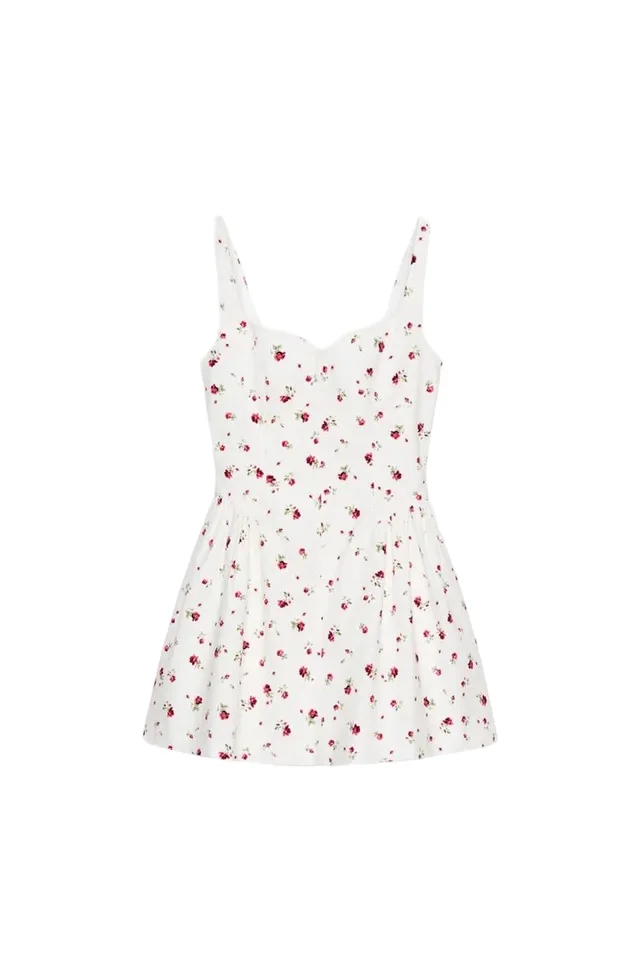
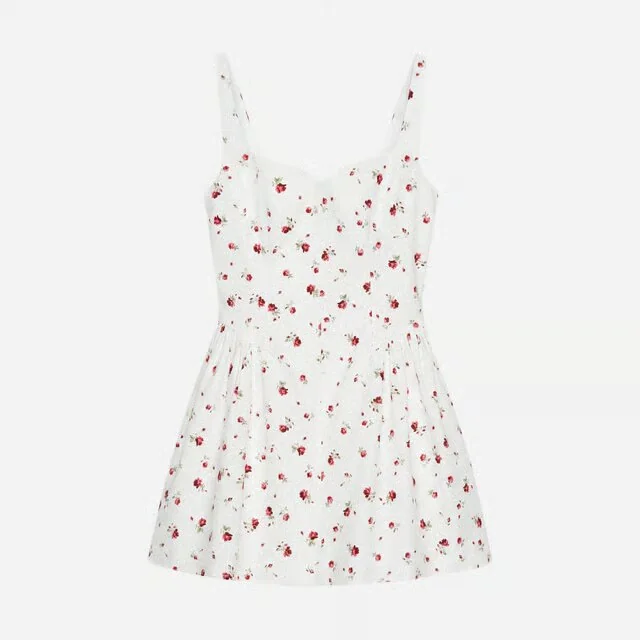
This shows an Astria result. The other service was not tested with this same photo.
How we evaluated Astria and Graswald
We used six B2B buying questions: who can actually adopt the product, how creative direction is specified and reused, category and channel coverage, how collaborators inside and outside the company participate, what evidence each vendor publishes, and how the commercial model behaves for a brand.
Quick verdict: Astria vs Graswald
| Decision factor | Graswald | Astria | Winner |
|---|---|---|---|
| Who can adopt it | Enterprise fashion brands via demo and sales conversation | Brands, studios, photographers, and educators producing fashion work | Astria |
| Professional fashion production | On-brand ecommerce and wholesale product imagery at catalog volume | Brand-directed production across ecommerce, lookbook, campaign, and social | Astria |
| Creative direction | Brand standards configured once: avatars, lighting, poses, presets | Build and reuse casting, styling, scene, crop, lighting, and format as one approved treatment | Astria |
| Category coverage | Apparel and product imagery in the material reviewed | Fashion-specific templates for apparel, beauty, jewelry, footwear, sports, luxury, and editorial | Astria |
| Casting and assets | Custom brand avatars built with the vendor | Models across ages and body types, locations, poses, and reusable brand references | Astria |
| Natural-looking people | Avatar quality plus resolution upscaling | Face-inpainting and refinement layer inside the production workflow | Astria |
| Motion | Video listed among supported formats | Multiple current video options animate approved stills in the same workflow | Astria |
| External collaborators | Internal teams and vendor studio partnerships | Photographer, in-house studio, and agency share one workspace, references, and approvals | Astria |
| Review experience | Built-in collaboration and review tools | Multiplayer canvas with named cursors and live voice over the actual looks | Astria |
| Collection scale | Batch generation, including CSV-driven runs | The full SKU set imports from Shopify or Google Drive and runs against one approved setup | Astria |
| Commercial model for brands | Not published; sales-led engagement | Brand pricing scoped to usage — pay for what you create | Astria |
| Best fit | Enterprise brands localising wholesale imagery to retailer specifications | Fashion brands producing on-brand ecommerce, lookbook, campaign, and social assets across a collection | Astria |
| Overall | A strong enterprise catalog engine | The stronger platform for professional fashion production | Astria |
Reviewed August 5, 2026; no controlled image-quality benchmark was run.
Graswald: enterprise brand standards, configured once
Graswald describes itself as the AI production studio for fashion brands, and the workflow matches: a team establishes brand standards—custom avatars, lighting, studio scene, poses—then generates across the catalog, including batch runs driven by CSV upload. Supported output spans PDP on-model imagery, packshots, lookbooks, lifestyle content, and video, with 4K resolution and PIM/DAM integrations.
The customer evidence is genuinely strong for this category. The VAUDE case study reports 50% lower content production costs and 30% more content published live, with the brand generating from flat-lays and factory sample photos on two custom avatars that replicate its studio scene digitally—work the internal team now runs in-house. The PUMA case study describes something more unusual: adapting central global creative to individual US retailer specifications for wholesale, so partners receive imagery that meets their guidelines without a round of rework.
Two caveats a buyer should carry into a demo. The PUMA story, unlike the VAUDE one, publishes no quantitative outcomes. And the homepage headline figures—90% cost reduction, 10x faster, 100% brand consistency—are vendor absolutes. "100% brand consistency" is not a testable claim; your own difficult garments are.
Astria: a professional fashion-production environment
Astria shares the configure-once thesis and diverges on who the system is for. Products, casting, references, templates, and outputs live in a brand workspace that a creative director, an in-house team, an outside photographer, or an agency can all work in. The approved treatment—casting, styling, scene, crop, lighting, format—is the reusable unit, and it is designed to be handed over rather than maintained by one party.
Coverage is the other divergence. Astria's templates span beauty, jewelry, footwear, sports, luxury, and editorial work alongside apparel, so a brand with an accessories line or a beauty extension is not routing those categories elsewhere. Astria's Describe tool can turn a rights-cleared reference into usable creative direction while accounting for the products and models already loaded, which is a faster path from "match our last campaign" to a template than commissioning a new avatar build.
Public proof: enterprise logos versus production breadth
Graswald publishes named enterprise stories—VAUDE with real numbers, PUMA on wholesale localisation—plus a strategic partnership with Orendt Studios. That is a serious set of references for large-brand catalog work, and it is vendor-published rather than independently verified.
Astria's public materials show a production base among brands and the professionals who create for them: Ronny Kobo, Nununu, Gant, Lee Cooper, and Nine West, alongside studios and photographers running client work on the platform. Also vendor-published. The distinction worth noting is the shape of the base: Graswald's evidence concentrates in large enterprises with internal content teams, Astria's spans brands and the external creatives they hire.
A realistic workflow comparison: an external creative director installing a workflow
Consider a mid-size brand whose visual direction comes from an outside photographer it has used for six seasons. The brand wants to produce most of its catalog and campaign imagery with AI, but it wants that photographer's eye encoded in the result, and it wants its own two-person ecommerce team running the work by spring.
With Graswald, the path runs through the vendor: an enterprise conversation, then a collaboration to build custom avatars and replicate the studio scene and lighting digitally. That produces a strong result—VAUDE's story describes exactly this and the outcome was good—but the brand's photographer is not naturally a participant in it, and the configuration lives in an enterprise engagement rather than in a workspace the brand's creative partner can operate.
With Astria, the photographer works directly in the brand's workspace: sets the casting, builds the templates, uses Describe to pull direction out of a rights-cleared reference from a previous season, and reviews with the ecommerce team on the multiplayer Board with live voice. When the season starts, the two-person team runs the approved treatment across the SKU set imported from Shopify or Google Drive. The photographer's judgment is now the brand's asset, and the handoff happened inside the tool rather than as a document.
The differences that matter most
Who is allowed to adopt it — winner: Astria
Graswald's go-to-market is demo-led and enterprise-shaped; we found no published pricing in the material reviewed. That is a reasonable choice for a company selling into PUMA, and it is a real barrier for the brand that wants to start next week, and for the studio or photographer who wants to build a practice on the tool. Astria is used by brands and by the creatives who serve them, which changes who can put the system in place.
Enterprise wholesale localisation and PIM/DAM depth — winner: Graswald
This is Graswald's genuine edge and the one concession that matters here. Producing imagery that satisfies each retail partner's format, dimension, and background specifications—out of the box, from one central creative—is a specific and unglamorous problem that large wholesale brands actually have, and Graswald has a named enterprise reference for solving it. Paired with PIM/DAM integration, that makes it a strong fit for brands whose content pipeline is an operations function. It is a distribution-compliance advantage rather than a creative-direction verdict.
Category coverage — winner: Astria
Graswald's published work centers on apparel and product imagery. Astria's template library covers beauty, jewelry, footwear, sports, luxury, and editorial treatments as first-class categories. For a brand whose line includes accessories, fragrance, or a jewelry capsule, that is the difference between one production system and several.
Collaboration, external partners, and handoff — winner: Astria
Graswald lists built-in collaboration and review tools, and for an internal content team that may be sufficient. Astria's model assumes the work crosses company boundaries: private brand workspaces that an external photographer or agency can be invited into, a multiplayer Board with named cursors, and live voice over the actual canvas. The test is not whether reviewers can comment; it is whether the person who defined the look and the person who will run it next season can be in the same room.
Collection scale — winner: Astria
Both products batch. Graswald's published route includes CSV-driven runs, which works and requires someone to maintain the spreadsheet. Astria imports the SKU set directly from Shopify or Google Drive and runs it against the approved setup, then extends the same treatment into campaign, editorial, social, and motion. Scale is not just how many images come out; it is how many separate jobs the season requires.
Commercial model for brands — winner: Astria
Graswald does not publish pricing, so a brand cannot model cost before entering a sales process. Astria's brand pricing is scoped to usage—pay for what you create, sized to the production engagement. Neither approach is inherently cheaper, and this article makes no such claim: the difference is that one can be estimated against a real collection before you commit, and the other cannot. Model a full collection, including rework and the channels beyond the catalog, before comparing.
Compounding production value — winner: Astria
In Astria, products, avatars, templates, approvals, and outputs accumulate in a workspace shared by the photographer, the in-house studio, and the agency. In Graswald, the configured brand setup is a real asset too—but it is one the vendor helped build and the internal team maintains, which is a narrower base to compound on.
Choose Graswald if...
- You are an enterprise brand and wholesale localisation to retailer specifications is a live problem.
- Deep PIM/DAM integration is a requirement of your content operations.
- Your content team is internal and does not need outside creatives inside the tool.
- Apparel and product imagery for ecommerce is the bulk of the work.
Choose Astria if...
- You want to start without an enterprise procurement cycle.
- An outside photographer, studio, or agency should be able to build and hand off the workflow.
- Your line spans categories beyond apparel—beauty, jewelry, footwear, sports, luxury, editorial.
- Review should happen on a shared canvas with voice, not through exported files.
- Campaign, editorial, social, and motion should extend the collection, not restart it.
The bottom line
For most fashion brands, Astria is the stronger choice: the same configure-once thesis, but open to the creatives who define the brand's look, broader across categories, and built so the workflow can be handed over. Graswald is a capable enterprise catalog engine with a genuinely distinctive answer to wholesale localisation.
These two deserve a real bake-off. Run the same difficult garment through both, and pay attention to who is in the room when the look gets approved.
What to test before choosing either platform
Run five representative SKUs—including one sheer, knit, or layered garment, and one from a non-apparel category if you have one—through both products. Require PDP, detail, campaign, and social crops, then add a colorway after approval. Test the vendor absolutes: put your hardest fabric against a "100% brand consistency" claim. Have a senior creative review outputs blind for garment fidelity, drape, anatomy, styling, and brand fit. Finally, invite your external photographer or agency into the workflow and ask them to reproduce the approved direction.
Frequently asked questions
Is Graswald an Astria alternative?
Yes — it is the closest positional competitor in this category. Both configure a brand setup once and generate at catalog scale. They differ on who can adopt them, how far coverage extends beyond apparel PDPs, and how external collaborators join the work.
Which suits a brand without an enterprise procurement cycle?
Astria. Graswald's go-to-market is demo-led and aimed at enterprise fashion brands, with no published pricing in the material reviewed. Astria is used by brands alongside the studios, photographers, and educators who produce for them.
Can an external photographer or agency build the workflow?
In Astria, yes: an outside creative can define casting, styling, and templates in a brand workspace, review with the team on a multiplayer canvas with live voice, then hand the running workflow to in-house staff.
What about categories beyond apparel?
Astria's template library covers beauty, jewelry, apparel, footwear, sports, luxury, and editorial work. Graswald's published material centers on apparel and product imagery for ecommerce and wholesale.
Is Astria better than Graswald for fashion brands?
For most brands, yes: broader category coverage, external collaboration and handoff, and no enterprise procurement cycle. Large brands whose priority is retailer-compliant wholesale localisation with deep PIM/DAM integration should evaluate Graswald on that basis.
For adjacent decisions, see how Astria compares with Looklet, Caimera, Ayna, and Botika.
Still narrowing the field? The category map is in best AI fashion photography platforms, and how production actually runs is in the AI fashion photoshoot guide.
Sources and methodology
This article compares public product information available on August 5, 2026. Key sources include Graswald's homepage and its stated production workflow, its VAUDE case study, and its PUMA case study, plus Astria's fashion and ecommerce offering, template gallery, workspace documentation, and video documentation. We did not find a public pricing page for Graswald in this review.
Pricing, plan limits, model libraries, integrations, and workflow support can change. Confirm current terms and test representative garments before making a production decision.
Explore Astria for fashion and ecommerce.
For current Astria rates and billing terms, see Astria pricing.