Astria vs Browzwear (2026): Which Is Better for Fashion Brands?
Browzwear and Astria are adjacent, not interchangeable, and any honest comparison has to start there. Browzwear is 30 years of 3D apparel design and development: fabric physics, virtual twins, fit validation, tech packs, fewer physical samples. Astria is a production system for the brand's imagery. The real question buyers ask is narrower and more useful than "which one"—it is whether an existing 3D investment can also produce the catalog and campaign.
The short answer: for producing on-brand imagery across a collection, Astria is the clear winner, and that is the decision this page addresses. For designing and validating garments before manufacture, Browzwear is the right tool and Astria does not compete with it. Plenty of brands should run both.
An Astria example: dress photo to packshot
Compare the original dress with the generated image, especially the neckline, seams, and hem.
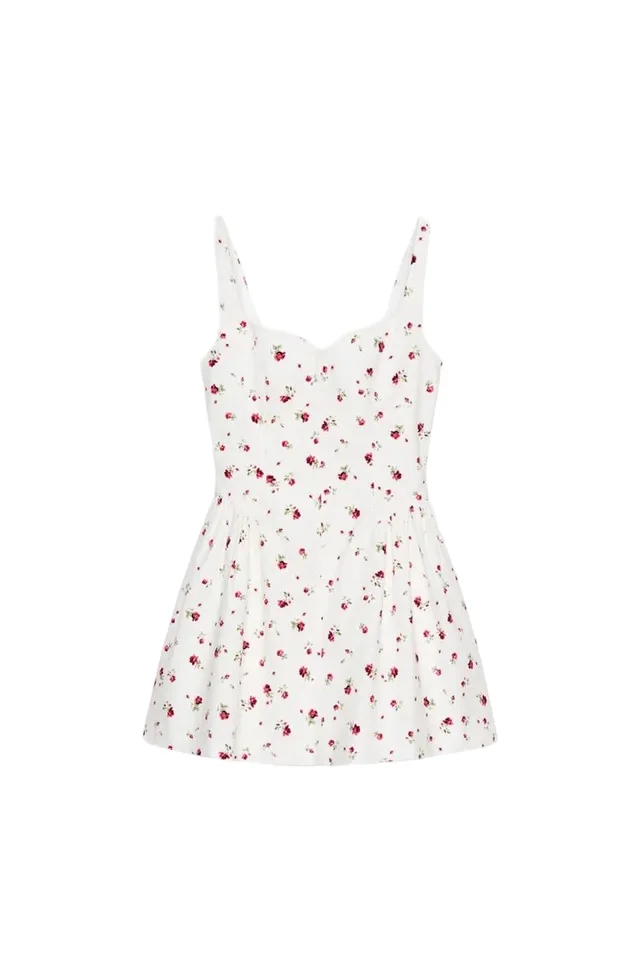
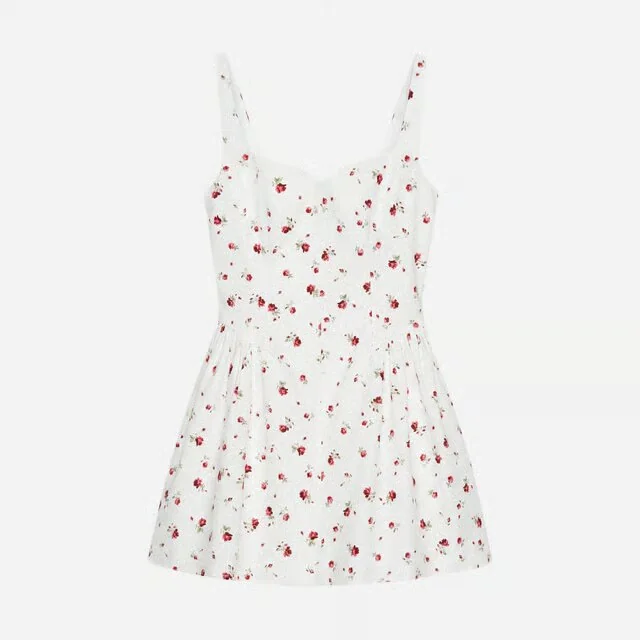
This shows an Astria result. The other service was not tested with this same photo.
How we evaluated Astria and Browzwear
Because these products sit at different points in the calendar, we evaluated them against one shared question: what does it take to get the season's imagery produced? That means looking at inputs required, specialist skills, category and channel coverage, collaboration, collection-scale behavior, and commercial shape — while stating plainly where Browzwear's real value lies, which is upstream.
Quick verdict: Astria vs Browzwear
| Decision factor | Browzwear | Astria | Winner |
|---|---|---|---|
| Where it sits in the calendar | Design and development, before manufacturing | Production of the brand's imagery, before and during selling | Astria for imagery |
| What it needs as input | A digital twin per style: patterns, graded fits, scanned or curated fabrics | Product photography the brand already has | Astria |
| Who operates it | Technical designers, pattern makers, and 3D specialists | A brand's creative and ecommerce team, or its photographer or agency | Astria |
| Professional fashion production | Technical and ecommerce assets derived from 3D styles | Brand-directed production across ecommerce, lookbook, campaign, and social | Astria |
| Creative direction | Materials, avatars, and rendering configured per style | Build and reuse casting, styling, scene, crop, lighting, and format as one approved treatment | Astria |
| Casting and assets | Customizable 3D avatars for fit and grading | Models across ages and body types, locations, poses, and reusable brand references | Astria |
| Category coverage | Apparel, with deep garment construction focus | Apparel, beauty, jewelry, footwear, sports, luxury, and editorial templates | Astria |
| Campaign and editorial imagery | Not the software's purpose | Campaign, editorial, and social treatments from the same approved setup | Astria |
| Motion | Not the software's purpose in the material reviewed | Multiple current video options animate approved stills in the same workflow | Astria |
| Collection scale for imagery | Bounded by how many styles have production-ready digital twins | The full SKU set imports from Shopify or Google Drive and runs against one approved setup | Astria |
| Commercial model for imagery | Licensing plus 3D specialist headcount; pricing not published | Brand pricing scoped to usage — pay for what you create | Astria |
| Sampling, fit, and manufacturing | True-to-life fabric physics, tension mapping, grading, tech packs | Not attempted | Browzwear |
| Best fit | Design and product development teams reducing samples and getting fit right | Fashion brands producing on-brand ecommerce, lookbook, campaign, and social assets across a collection | Depends on the job |
| Overall, for producing imagery | A capable by-product of a design pipeline | The stronger platform for professional fashion production | Astria |
Reviewed August 6, 2026; no controlled image-quality benchmark was run.
Browzwear: getting the garment right before it exists
Browzwear's platform is built around a serious idea: if a virtual garment behaves like the physical one, most of product development can happen before anything is cut. VStitcher creates what the company calls accurate virtual twins of physical garments, combining AI-driven fit intelligence with true-to-life 3D simulation. Designers work across 2D drafting and 3D draping, fit on customizable avatars, grade across sizes, use tension and pressure mapping, and export tech packs with detailed specifications. Fabric Analyzer measures real fabric properties so the simulation is grounded in the actual material. Stylezone handles collection collaboration; the Open Platform handles integrations.
The claimed outcomes are the ones a product development director cares about: 50–80% fewer physical samples, 95% first-time-right samples, double the development speed, 35% total cost reduction. The company cites over 1,000 apparel companies and 10 million digital garments created, with brands including Nike, Puma, Under Armour, Target, Walmart, and VF Corporation. These are vendor-published figures rather than independent benchmarks, but the adoption base in this space is not in question.
Browzwear also states that the platform generates technical and ecommerce assets. That is true, and it is the sentence that brings buyers to this comparison.
Astria: a professional fashion-production environment
Astria starts where Browzwear's job ends. Products, casting, references, templates, and outputs live in a brand workspace, and the approved treatment—casting, styling, scene, crop, lighting, format—becomes the reusable unit that produces the season's imagery.
The inputs are the difference. Astria works from the product photography a brand already has, not from a digital twin built to manufacturing tolerances. Templates span beauty, jewelry, footwear, sports, luxury, and editorial alongside apparel, and the same approved direction extends into campaign frames, social crops, and motion. The people operating it are the brand's creative and ecommerce team, or the photographer or agency they work with—not a 3D department.
Public proof: development adoption versus production adoption
Browzwear's proof is deep and industrial: a thousand-plus apparel companies, household-name brands, and three decades of digital product creation. Read it for what it demonstrates—that 3D design and development works at scale in real supply chains.
Astria's public materials show a production base among brands and the professionals who create for them, including Ronny Kobo, Nununu, Gant, Lee Cooper, and Nine West, alongside studios and photographers running client work. Also vendor-published. Neither set of evidence transfers to the other's domain, which is the honest summary of this whole comparison.
A realistic workflow comparison: the brand with 3D already in the building
Consider a sportswear brand that adopted 3D development two years ago. Roughly half its styles have digital twins. The ecommerce team asks the obvious question: can we skip the photoshoot?
Rendering from Browzwear is possible, and for the styles that have production-ready twins it can look excellent, because the garment geometry and fabric behavior are real rather than inferred. But the path has costs that do not appear on a license: only half the line qualifies, so the other half needs a different solution anyway; each render needs a 3D artist to build the scene, light it, and produce the frames; the avatars are fit avatars rather than cast models with a brand's point of view; and a request for a warmer campaign crop is a rendering job, not an edit. Producing 400 SKUs across four channels this way is a studio operation staffed with specialists.
With Astria, the same team works from the product photography it already produces. Casting, styling, lighting, crop, and format get approved once, the SKU set imports from Shopify or Google Drive, and the collection runs against that treatment. The styles with digital twins and the ones without are handled identically. Campaign and social extend the same direction, and motion animates stills that already passed review.
The two are not in conflict. The 3D investment keeps paying for itself upstream—fewer samples, better fit, faster development—while imagery production stops depending on which styles happen to have twins.
The differences that matter most
Digital product creation, fit, and sampling — winner: Browzwear
This is Browzwear's genuine edge and the one concession that matters, and it is a large one. True-to-life fabric physics, tension and pressure mapping, size grading, and tech pack generation solve problems that no image-generation product addresses, including Astria. If your objective is fewer physical samples, better first-fit rates, or a shorter development calendar, Browzwear is the answer and this comparison should not talk you out of it.
What it takes to produce one image — winner: Astria
Producing imagery from 3D requires a production-ready digital twin, a specialist to render it, and a scene built per treatment. Producing imagery in Astria requires a product photo and an approved template. For a design team with twins for every style and 3D artists on staff, the first path is viable. For everyone else, the prerequisite is the obstacle.
Coverage of the channels that sell — winner: Astria
Browzwear's ecommerce output is a by-product of a development pipeline: accurate, technical, and centered on the garment. Lookbooks, campaign frames, editorial treatments, social-native crops, and motion are not what the software is for. Astria treats those as expressions of one approved direction, which is what a season actually requires.
Casting and creative direction — winner: Astria
A fit avatar exists to test how a garment sits across sizes. A cast model exists to express who the brand is talking to. Astria's reusable library covers ages and body types, including children and extended-size casting, alongside locations, poses, and brand references—and it holds styling and composition decisions, not just body geometry.
Collaboration on the creative decision — winner: Astria
Browzwear's collaboration is built for collections in development, which is the right shape for its users. Astria's multiplayer Board is built for the creative review: named cursors, live voice, and the actual production canvas shared by the photographer, the in-house studio, and the agency.
Collection scale for imagery — winner: Astria
Browzwear's imagery scale is bounded by digital twin coverage; a style without a production-ready twin cannot be rendered, and building one is development work, not marketing work. Astria imports the whole SKU set and runs it against the approved setup regardless of how each style was developed.
Commercial shape — winner: Astria
Browzwear does not publish pricing in the material reviewed, and the real cost of imagery through a 3D pipeline is not the license—it is the specialist headcount that operates it. Astria's brand pricing is scoped to usage: pay for what you create. This article makes no claim about which is cheaper overall; it notes that the imagery cost in a 3D pipeline is mostly people, and asks you to model a full collection, including the styles without twins, before comparing.
Choose Browzwear if...
- Your objective is fewer physical samples, better first-fit rates, or a faster development calendar.
- Garment construction, fabric behavior, grading, and tech packs are the work.
- You have or want technical design and 3D specialist capability in-house.
- Imagery is a welcome by-product rather than the goal.
Choose Astria if...
- The goal is producing the season's catalog, lookbook, campaign, social, and motion assets.
- You want to work from product photography rather than build a digital twin per style.
- Your creative team, photographer, or agency should operate the workflow — not a 3D department.
- One approved creative direction must carry across the collection and its channels.
- Review should happen on a shared canvas with voice, not through rendered files.
The bottom line
These two products belong in different parts of the year, and the most common right answer is both. For designing garments, validating fit, and cutting samples, Browzwear is a mature and well-proven investment. For producing the imagery that sells the finished collection, Astria is the stronger choice: it works from what the brand already has, covers every channel from one approved direction, and does not make marketing output depend on the state of the 3D pipeline.
What to test before choosing either platform
If you already run 3D, take five styles—ideally a mix with and without production-ready twins—and produce a full channel set for each: PDP, detail, campaign, and social. Track two numbers honestly: elapsed time and specialist hours. Then change the creative direction after approval and measure the cost of that change in each path. Have a senior creative review outputs blind for garment fidelity, drape, anatomy, styling, and brand fit. Finally, ask what happens to the styles that will never get a digital twin.
Frequently asked questions
Is Browzwear an Astria alternative?
No — they are adjacent, not interchangeable. Browzwear is 3D design and development software for getting a garment right before manufacturing. Astria produces the brand's catalog, lookbook, campaign, and social imagery. Many brands run both.
Can we use our 3D garments instead of a photoshoot?
You can render from them, but it is a specialist path: every style needs a digital twin built and a 3D artist to light and render it. Astria produces marketing imagery from product photography without per-style CAD work.
Which is better for reducing physical samples?
Browzwear, decisively. Fabric physics, tension and pressure mapping, grading across sizes, and tech pack output address sampling and fit — problems no image-generation tool solves.
Which is better for catalog and campaign imagery?
Astria. It turns one approved creative direction into catalog, lookbook, campaign, social, and motion assets across a collection, without a 3D pipeline or specialist headcount.
Is Astria better than Browzwear for fashion brands?
For producing the brand's imagery, yes, and that is the decision this article addresses. For designing and validating garments before manufacture, Browzwear is the right tool and Astria does not compete with it.
For adjacent decisions, see how Astria compares with Looklet, Graswald, and Pixelz.
Still narrowing the field? The category map is in best AI fashion photography platforms, and how production actually runs is in the AI fashion photoshoot guide.
Sources and methodology
This article compares public product information available on August 6, 2026. Key sources include Browzwear's homepage with its stated platform outcomes and customer base, and its VStitcher product page describing virtual twins, fabric physics, fit tools, and tech pack output, plus Astria's fashion and ecommerce offering, template gallery, workspace documentation, and video documentation. We did not find public pricing for Browzwear in this review.
Product scope, licensing, integrations, and workflow support can change. Confirm current terms and test representative garments before making a production decision.
Explore Astria for fashion and ecommerce.
For current Astria rates and billing terms, see Astria pricing.