Best 3D Packshot Services for Ecommerce (2026): What to Buy
Searching for a 3D packshot service produces a category error. One service generates a rotation video from a flat lay. Another photographs your inventory on a turntable. A third sells the turntable. A fourth builds a real-time model. A fifth assumes that model already exists and optimizes it for the web.
Those are five different inputs, contracts, and failure modes.
Upfront disclosure: this comparison is published by Astria, and Astria is our recommendation when a fashion brand needs a fast rotation video and multi-angle stills from one flat-lay photo. Astria calls the workflow a “3D ghost packshot,” but the delivered rotation is an MP4—not a dimensionally accurate interactive 3D model. That distinction is central to the comparison.
Reviewed September 2, 2026. Vendor capabilities below come from first-party public material. Claims about price, capacity, efficiency, or commercial outcomes are labeled as vendor-reported and should be tested in your own workflow.
An Astria example: dress photo to packshot
Compare the original dress with the generated image, especially the neckline, seams, and hem.
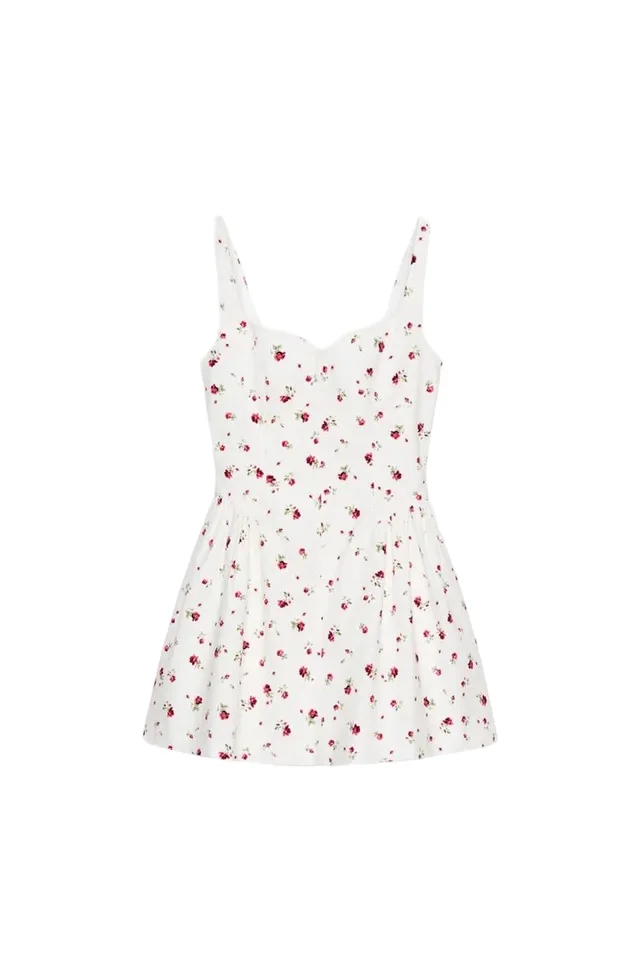
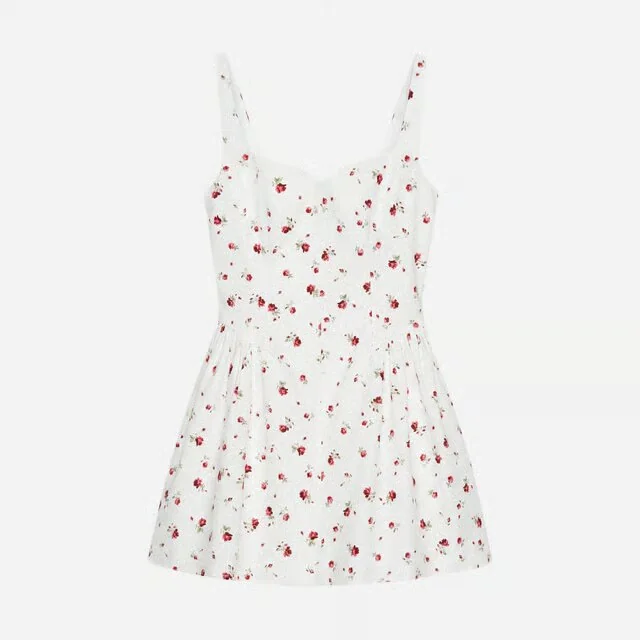
This shows an Astria result. The other service was not tested with this same photo.
The shortlist by job
| Purchase | Representative supplier | You provide | You receive | Best when |
|---|---|---|---|---|
| AI-generated fashion rotation | Astria | One flat-lay product photo | 6-second 1080p rotation MP4 plus three angle stills | You need fast, repeatable PDP and social assets without shipping samples |
| Managed physical capture | GoPackshot | Physical inventory, styling and channel brief | Approved stills, ghost mannequin, video or photographic 360 assets | You want a service accountable for logistics through delivery |
| Automated capture system | Orbitvu | Products, operators, studio space and capital | Hardware/software workflow for stills, 360 spins and video | Product volume is steady enough to justify an in-house line |
| Automated capture plus photogrammetry options | PhotoRobot | Products, cameras, operators and production design | Stills, spins, video and—on suitable workflows—photogrammetry-derived models | You need a configurable in-house capture system and will validate each output type |
| True 3D commerce platform | Threekit | Product data and production-ready 3D assets or an asset-creation scope | Interactive 3D, configuration, renders and AR experiences | Products have options or configuration is part of the buying decision |
| 3D optimization and distribution | VNTANA | Existing CAD, design or scanned 3D files | Web-optimized 3D/AR assets and channel delivery | The bottleneck is publishing existing models, not photographing products |
| Custom model creation | Shopify Partner | Multi-angle photos, measurements and technical drawings where available | A reviewed GLB for Shopify, with USDZ handled by the platform workflow | You need store-ready true 3D for a bounded set of products |
This is not a ranking from one to seven. It is a routing table. An AI-generated rotation, a managed studio, and a true 3D platform solve different problems.
1. Astria: the fast fashion rotation from one flat lay
Astria is the most direct option here for a fashion team that has a flat-lay product photo and needs the product to move. The Astria 3D ghost packshot workflow returns one six-second 1080p MP4 rotation plus front, side, and three-quarter stills. The assets are designed for product pages, Reels, TikTok, and ad creative.
The operational difference is substantial: no turntable, model, studio booking, or sample shipment. Choose a locked template for the product class, upload the flat lay, and use the resulting rotation and stills across the collection. See Astria pricing for current packshot rates and billing terms.
The trade-off is equally important. Astria infers views that the one input photograph does not show. The output is a generated video, not a photographed sequence and not a model containing geometry, materials, or verified dimensions. Review prints, logos, closures, hardware, hemlines, back construction, and product color against the real SKU before publication.
Choose Astria when: the product is fashion, speed and no-shipping production matter, an MP4 rotation answers the channel need, and your team can approve the inferred views. Start with one difficult SKU before scaling highly structured or sheer products.
Do not choose Astria for this job when: the shopper must freely control the camera, the deliverable must be GLB or USDZ, AR scale must be dimensionally validated, or a marketplace and product-risk policy requires calibrated physical evidence.
2. GoPackshot: managed physical production
GoPackshot is the closest match for a buyer who means, “Take our products and return ecommerce-ready assets.” Its services page describes packshot, model, ghost-mannequin and flat-lay photography; video and 360-degree content; product logistics; retouching; quality control; and delivery into brand systems.
The important word is managed. You ship physical inventory and buy an operating service, not a self-serve 3D application. That makes GoPackshot a credible choice when color, garment construction, marketplace rules, product handling, and accountability matter more than owning the capture line.
GoPackshot also publishes claims about color tolerances, daily capacity, studio count, integrations, and tracked logistics. Treat those as vendor-reported claims, then put the relevant ones into the contract or test brief. A public capacity number does not establish capacity for your garment mix, revision policy, or launch window.
Its public service description includes 360-degree video, but does not describe the output as a freely navigable GLB or USDZ model. If you need true 3D, ask three blunt questions:
- Is the deliverable an image sequence, video, web viewer, or model file?
- Can the shopper move to an angle that was never photographed?
- Do we receive geometry, materials, dimensions, and usage rights?
If the answers are “sequence,” “no,” and “no,” you are buying a photographic spin. That can be an excellent asset. It is not a true 3D model.
3. Orbitvu: bring automated capture in-house
Orbitvu sells automated photography systems rather than operating as your outsourced packshot studio. Its ecommerce product line covers stills, 360-degree images and video; its fashion positioning includes ghost mannequin, flat lay, on-figure work, and standardized footwear angles.
This route changes the economics. Instead of paying a service per project or SKU, you own equipment, studio utilization, operators, styling, color management, maintenance, and workflow integration. The best candidate already has products moving through one facility and a team that can keep a capture recipe stable.
Vendor language such as “web-ready content in minutes” is vendor-reported and should be separated into capture time, operator touch time, retouching time, rework, and publishing time. A fast turntable does not dress a mannequin, correct a crushed collar, approve color, or resolve a barcode mismatch.
Choose Orbitvu when the problem is repeatable physical capture at sustained volume. Do not choose it because the word “360” appears near “3D.” Confirm the exact output your selected system produces.
4. PhotoRobot: automated capture with a wider output menu
PhotoRobot also sells hardware and workflow software for in-house or studio operators. Its public output gallery explicitly separates still images, 360 spins, “3D spins,” photogrammetry 3D models, and 360 video. That taxonomy is useful because it exposes how different outputs are often grouped under one marketing label.
For fashion, PhotoRobot sells ghost-mannequin equipment and describes workflows for stills, spins, and ecommerce 3D models. Those are vendor-reported capabilities. Ask to see an output from the same product class and material as yours: a matte sneaker is not evidence for patent leather; a rigid bag is not evidence for a soft dress.
PhotoRobot is the more relevant shortlist entry when you want a configurable automated studio and may need several capture modes. The procurement risk is complexity: a system that can produce five asset types still needs five acceptance standards.
5. Threekit: true 3D, configuration, and AR
Threekit belongs in the shortlist only when the buying problem is interactive 3D rather than photography. Its platform overview distinguishes virtual photography, WebGL-based interactive 3D, and augmented reality. Its platform can create glTF and USDZ variants for web AR and supports configurable products whose visual state changes with selected options.
That is a materially different deliverable. The shopper can interact with geometry and materials, and the same product definition can support many configurations. It is especially relevant to customizable bags, footwear, jewelry, furniture, equipment, or other structured products where options and spatial understanding affect purchase.
The hard part is the asset system behind the viewer. Before buying, scope who creates the base geometry, materials, variant logic, dimensions, and future revisions. Threekit publishes commercial performance statistics; treat every such number as a vendor-reported result, not a forecast for your store.
For a single non-configurable garment, this can be more system than the buying question deserves. For a configurable product family, it may be the only category here that actually solves the problem.
6. VNTANA: optimize and distribute models you already have
VNTANA is best understood as a 3D asset pipeline. Its 3D commerce page describes taking existing CAD or 3D files, optimizing them, and distributing web-ready 3D and AR assets to commerce channels.
That is valuable when product development already produces usable 3D assets. It is not the same as shipping a garment to a photography studio. Ask whether model creation or cleanup is included in your scope, because “upload your 3D file” assumes the most expensive input may already exist.
VNTANA publishes performance claims for 3D commerce; those are vendor-reported. Evaluate the platform on file reduction, visual fidelity after optimization, variant handling, viewer performance, publishing integrations, and the labor saved in your actual catalog.
7. Shopify Partners: bounded custom model production
For a Shopify merchant with a small, prioritized model list, the most direct procurement path may be a 3D-modeling partner rather than an enterprise platform. Shopify’s partner guidance says a modeler may need multi-angle photographs, dimensions in millimeters, diagrams, and CAD files where available. It also provides a practical review checklist for shape, scale, materials, reflections, textures, edges, and unwanted gaps.
Shopify says the delivered model should be a GLB, approximately 4 MB and no more than 15 MB under the guidance on that page. Recheck current limits before commissioning because platform requirements change. Your theme must also support the media type; see the Shopify product media guide before approving the project.
This route is strong when true 3D is needed for ten important products, not ten thousand speculative ones.
The service-selection scorecard
Do not ask each supplier for “a 3D packshot quote.” Send one matrix and require every cell to be answered.
| Criterion | What a comparable answer includes |
|---|---|
| Input | Physical product, photos, measurements, CAD, existing model, or some combination |
| Output | JPG/PNG, image sequence, MP4, hosted viewer, GLB, USDZ, source model |
| Interaction | Fixed spin, arbitrary camera, zoom, configuration, animation, AR |
| Accuracy | Color tolerance, dimensional tolerance, material reference, scale validation |
| Product fit | Proof on your hardest material and construction—not a generic demo |
| Operations | Logistics, styling, operators, retouching, QA, hosting, publishing |
| Revisions | Included rounds, correction SLA, product-change process, version history |
| Ownership | Source files, derivatives, viewer dependency, usage term, portability |
| Performance | File weight, load behavior, mobile fallback, analytics events |
| Commercials | Setup, per-SKU, per-view, hosting, integration, support, annual minimum |
Then run the same five-product pilot with every finalist: a structured bag, a reflective item, a product with fine text or hardware, a soft garment, and a color-critical product. Score published assets, not sales demos.
How Astria fits with physical capture and true 3D
Astria should be scored on the asset it actually delivers: a fast AI-generated rotation video and angle stills from one fashion flat lay. It should not be scored as a true 3D modeling bureau.
The strongest hybrid uses an approved packshot or well-lit flat lay as Astria’s input, reviews the inferred views against the physical SKU, and publishes the MP4 where rotation communicates shape or drape. Keep calibrated photography for exact color and construction evidence. Buy true 3D only when arbitrary viewing, configuration, or AR is the requirement.
That gives Astria a clear place in the buying decision rather than pretending every “3D packshot” is the same file. For the full format distinction, read 3D packshots for ecommerce. For the physical-to-generative operating handoff, continue to AI product photography vs a packshot studio.
Frequently asked questions
What is the best 3D packshot service for ecommerce?
There is no single best service because several different purchases share the name. Choose Astria for a fast AI-generated fashion rotation video and angle stills from one flat lay, a managed studio for approved physical photography and captured spins, capture equipment for a repeatable in-house studio, a model-creation partner for a true GLB or USDZ, and a 3D commerce platform for configuration, AR, or multi-channel delivery.
Where does Astria fit among 3D packshot services?
Astria is the fast AI-generated option for fashion. Its 3D ghost packshot workflow takes one flat-lay photo and returns a six-second 1080p rotation video plus three angle stills for social and product pages. It does not return an interactive GLB or USDZ model, and inferred views still require product-accuracy review.
Does GoPackshot create true interactive 3D models?
GoPackshot's public services page describes packshot photography, ghost mannequin, video, and 360-degree content within a managed physical production service. It does not present those outputs as freely navigable GLB or USDZ models. Ask for the exact deliverable, viewer, and file format rather than assuming that 360 means true 3D.
Is a 360 spin the same as a 3D product model?
No. A photographic 360 spin is a sequence of captured angles. A true 3D model contains geometry and materials, can usually be viewed from arbitrary angles, and may support augmented reality. Some vendors use the word “3D” for a spin effect, so inspect the exported file and interaction rather than the label.
When should a brand buy automated 360 capture equipment?
Buy equipment when physical products already flow through one location, the shot recipe is stable, utilization will be high, and the team can own styling, color management, maintenance, and quality control. Outsource when volume is irregular or operational ownership would sit with nobody.
What should be included in a 3D packshot quote?
A comparable quote should name the source inputs, output files, number of views or model variants, polygon and texture budgets, color and dimension tolerances, AR support, viewer or hosting fees, revision rounds, ownership, turnaround, and what happens when the physical product changes.
Sources and methodology
This comparison uses public first-party material from Astria, GoPackshot, Orbitvu, PhotoRobot, Threekit, VNTANA, and Shopify. We did not accept vendor conversion, capacity, or efficiency claims as independent evidence. Astria’s output, workflow, timing, and price statements are also first-party claims and are labeled accordingly. Availability, integrations, pricing, and technical limits change; confirm them in a written scope and test the hardest products in your catalog.