Wedding Dress Photography Prompts: A Bridal Lookbook Shot List
Bridal imagery has two simultaneous jobs: sell the feeling and prove the dress. An airy image that erases lace, shortens the train or moves the waistline is not a product image. A useful prompt names the construction first, then directs pose, environment and emotion.
The public Wedding Dress workspace and Wedding Dress template provide a runnable starting point.
Reference → prompt → result
Bridal
Start with a full-length construction proof
A quiet front three-quarter pose shows silhouette, waist, hem and train before movement introduces ambiguity.
- Full length
- 2:3
- Soft daylight
Reference inputs
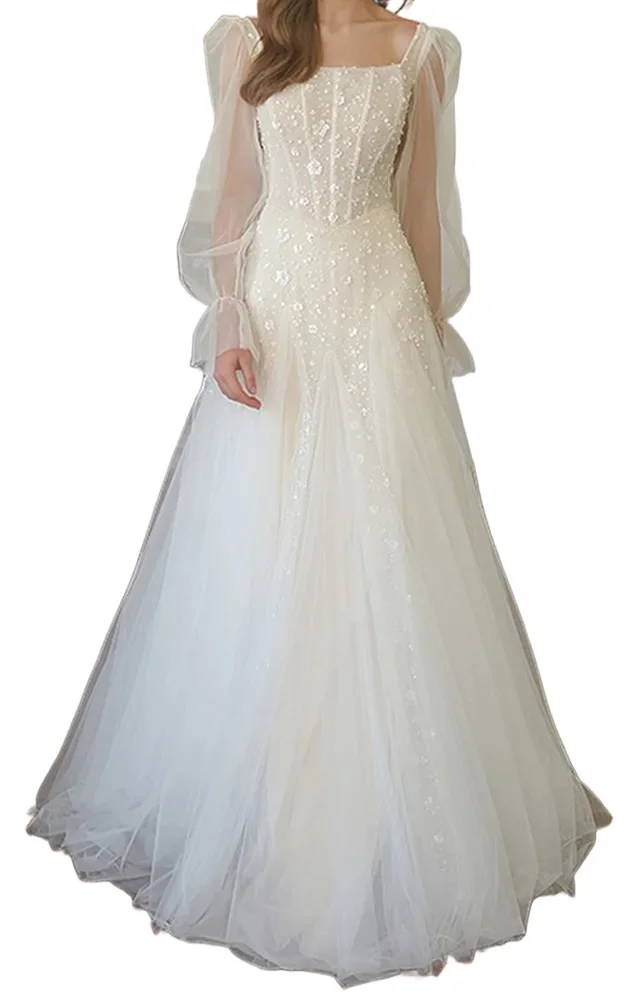
Generated result
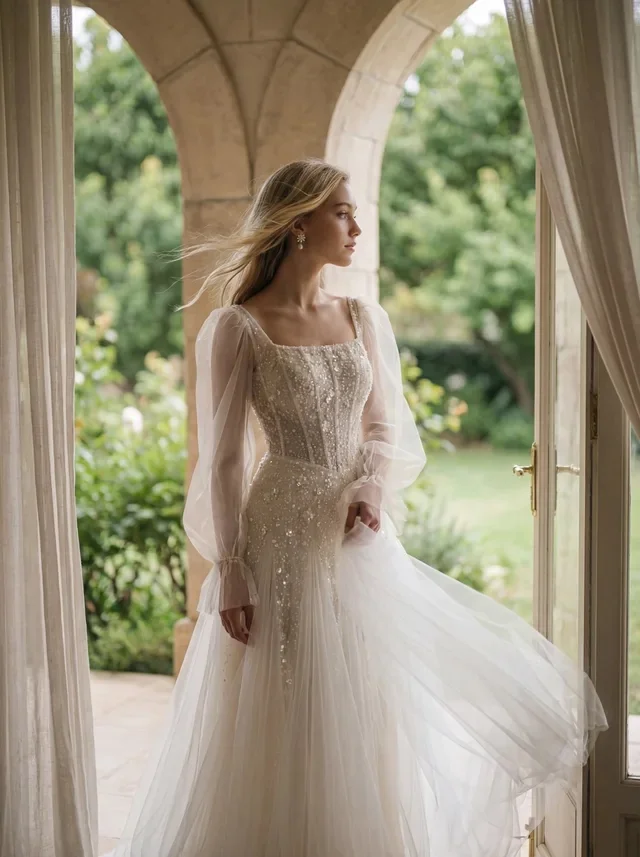
Full-length front three-quarter bridal portrait of the model wearing the exact reference wedding dress. Preserve the neckline, sleeve shape, bodice construction, waist position, lace placement, skirt volume, hem and train length. The model stands still with arms clear of the bodice. Soft side daylight, protected white highlights, pale stone interior, realistic fabric weight, vertical 2:3.White-on-light scenes hide construction, while movement can invent lace, volume and train length.
- Confirm neckline and waist before judging the face.
- Protect texture in the brightest lace and satin.
- Keep hands away from closures and bodice details.
- Compare front and back images for one consistent train length.
Reference and result images come from the linked public Astria example.
Eight copy-ready bridal prompts
1. Full-front proof
Document the complete construction before directing a story.
Full-length straight-on bridal portrait of the model wearing the exact reference wedding dress. Preserve the neckline, sleeves, bodice, waist, seams, lace placement, skirt volume, hem and train. Arms relaxed away from the dress, feet together, soft directional daylight, pale neutral studio, protected white highlights, vertical 2:3.2. Back and train
Show closures and the feature most often hidden in a front hero.
Full-length rear three-quarter bridal portrait of the same model and exact reference dress. Preserve the back neckline, buttons or closure, seam placement, skirt volume and full train length. Arms clear of the back, train arranged naturally on pale stone, soft window light, vertical 2:3.3. Side silhouette
Prove bodice depth, waist position and skirt profile.
Full-length exact side-profile portrait of the same model in the reference wedding dress. Preserve bodice structure, waist position, skirt projection, hem and train. Upright relaxed posture, hands lightly joined below the waist without covering the dress, soft side light, vertical 2:3.4. Bodice and lace detail
Pause the story to document workmanship.
Shoulder-to-waist bridal detail of the exact reference dress, focused on neckline, corsetry, seams, embroidery and lace placement. Arms remain outside the bodice. Soft raking daylight reveals white-on-white texture without grey cast or clipped highlights, shallow background, vertical 4:5.5. Controlled movement
Introduce life while limiting fabric invention.
Full-length bridal photograph of the same model taking one slow step in the exact reference dress. Preserve all construction and train length; allow gentle movement only at the outer skirt and veil. Keep the bodice sharp, hands clear, realistic fabric weight, soft courtyard daylight, vertical 2:3.6. Staircase composition
Use architecture to reveal layers and train shape.
Full-length bridal portrait of the same model paused three steps up a broad pale-stone staircase in the exact reference dress. Arrange the train down the steps without changing its length or volume. Preserve lace and closures, eye-level camera, diffused skylight, vertical 2:3.7. Seated quiet frame
Add intimacy while showing believable fabric compression.
Three-quarter seated portrait of the same model in the exact reference wedding dress on the edge of a pale bench. Torso upright, hands together beside the hip, bodice and waist unobstructed. Preserve construction and realistic folds; do not add skirt volume, soft window light, vertical 4:5.8. Closing environmental wide
End the lookbook with atmosphere rather than another catalog pose.
Wide environmental bridal photograph of the same model in the exact reference dress standing beneath a tall stone arch. Show the complete silhouette and train at a smaller scale with generous architecture. Soft late-afternoon daylight, subtle warm-neutral grade, no added bouquet or accessories, vertical 4:5.Bridal-specific review checklist
- Construction: neckline, sleeve, waist, closure, seams and lace stay in the same locations.
- White detail: embroidery and satin retain texture without turning grey or clipping to blank white.
- Train: length and volume agree across front, side, back and movement frames.
- Hands: fingers look natural and never cover the product feature the shot should explain.
- Accessories: veil, gloves, bouquet and jewelry appear only when supplied or intentionally specified.
- Sequence: alternate proof, detail, movement and environment instead of repeating full-length poses.
How to run the shot list
- Upload front, back, profile and close construction references.
- Generate the full-front proof and approve the dress before moving on.
- Copy prompts in order, keeping dress, cast, light family and grade invariant.
- Compare train length and waist placement across the contact sheet.
- Remove any beautiful frame that represents a different dress.
For sequencing and art direction, continue with the AI Lookbook Guide. For more fashion prompt structures, see AI Fashion Photography Prompts.
Frequently asked questions
What shots should a wedding dress lookbook include?
Cover front, back, side, construction detail, controlled movement, environment and a closing frame.
How do you preserve bridal lace and construction?
Name each construction fact explicitly and compare every result with clear garment references.
How do you prompt white fabric without losing detail?
Ask for soft directional light, protected highlights and visible texture across dress and background.